 Svenska
  English (UK)
  Español
  Deutsch
  Italiano
  Français
  Norsk bokmål
  Português
  Čeština
  Dansk
Dansk  Polski
  Nederlands
  Magyar
  Ελληνικά
  Suomi
Suomi 
Också okategoriserad
What Is an ESD Tester and Do You Really Need One?
jun
A tiny, unnoticeable spark can effortlessly destroy a high-end circuit board before the finished product even gets packaged for delivery. Most electronics assembly workshops spend thousands of pounds stocking up on specialised protective mats, grounding wrist straps, and conductive shielding bags, thinking their setup is totally bulletproof. However, without a dedicated ESD-testare, you are essentially flying blind. You might have the most expensive protective layout in the industry, but if an unnoticeable layer of dust, an oxidised metal snap, or a tiny broken wire interrupts your grounding path, your entire defensive line drops to zero.
Relying on sheer guesswork inside an Electrostatic Protected Area is a massive gamble that eventually leads to costly product returns.
The Core Function of Static Control Testing Gear
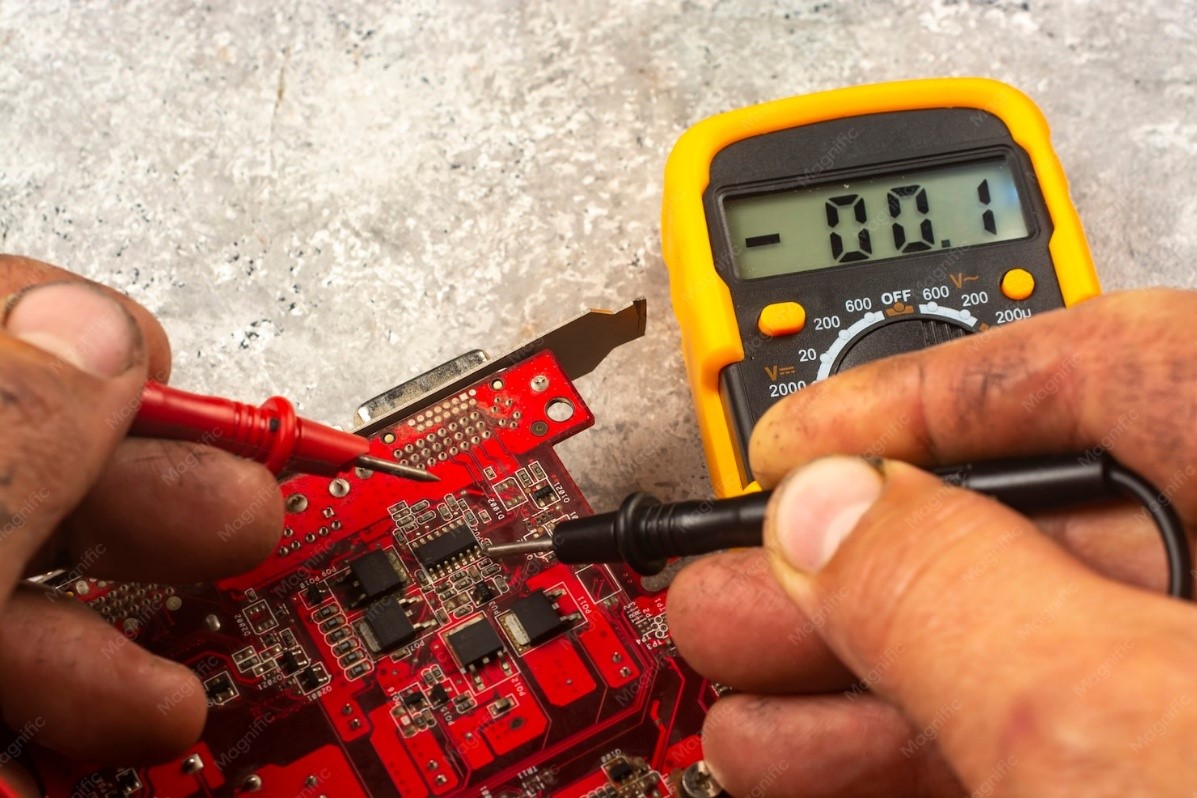
A static diagnostic device is a piece of industrial test equipment designed to verify that your protective gear is actually conducting electricity to the ground. Many facility managers confuse these specialised instruments with standard household electrical multimeters. A basic store-bought multimeter only pushes a tiny 9-volt battery charge through a wire, which is completely inadequate for testing high-resistance, static-dissipative materials.
Professional evaluation meters utilise a much higher testing voltage, typically toggling between 10 volts and 100 volts depending on the material classification. This higher voltage is necessary to accurately measure whether your protective equipment can successfully grab static charges from an operator and discharge them safely.
If your daily operations involve handling high-density microchips, medical sensors, or aerospace telemetry, a failure in your grounding chain can ruin your company’s reputation overnight. Regular testing ensures that your workstation protective items are performing up to international regulatory standards, rather than slowly degrading into useless pieces of basic plastic or dry rubber.
The Main Types of Validation Instruments

Different manufacturing environments require distinct levels of diagnostic tracking. The hardware you choose should match the physical movements of your technical staff and the specific layout of your assembly workbenches.
Primary Equipment Categories
- Wrist Strap and Footwear Combo Testers: Wall-mounted stations placed at the factory entrance that check an operator’s personal grounding gear before they touch a single component.
- Surface Resistance Meters: Portable handheld units equipped with two heavy five-pound cylindrical weights used to audit the electrical conductivity of tabletops and vinyl flooring.
- Continuous Constant Monitors: Small desktop brackets that wire directly into your bench grid to track the integrity of an operator’s wrist band in real time, sounding an immediate alarm if the connection slips.
Integrating these verification stations into your daily shop routine creates an ironclad safety net. Rather than finding out a grounding wrist band was broken after a whole batch of circuit boards fails final quality inspection, you catch the faulty hardware the exact second the technician walks through the front door.
Do You Really Need One in Your Workshop?
Determining whether you need to invest in specialised verification hardware depends entirely on your product sensitivity and compliance liabilities. If you are a hobbyist building simple amateur radio kits on the weekend, a full surface resistance kit is probably overkill. For commercial repair centres, contract manufacturers, and component distribution hubs, skipping this verification process is a dangerous business practice.
When you install high-quality Esd-produkter, you are putting structural trust in their built-in conductive pathways. Over time, grease from fingers, solder flux splattering, and standard chemical cleaners build up an invisible insulative film over your tabletops. A bench mat can look completely spotless visually while failing to transfer electricity due to this microscopic contamination layer.
Furthermore, if your company seeks ISO 9001 certification or services high-profile industrial clients, you will be required to provide verifiable data logs showing regular equipment audits. A proper verification instrument provides the objective proof your auditors need to see, confirming that your safety parameters are being actively maintained.
Maximising the Efficiency of Your Grounding Network

A reliable diagnostic program is only effective if it links back to a structurally sound earthing network. For instance, when a surface meter checks a workbench mat, it is verifying that the charge can travel freely across the material toward the main building ground point.
This tracking process relies heavily on structural connection points like a heavy-duty Jordförbindningsplugg fitted into your standard mains wall socket. These specialised grounding plugs provide a secure terminal hub for your bench cords and personal wrist wires to plug into. If the connection at the wall plug is loose or oxidised, the static electricity has nowhere to escape, rendering your bench mats and testing routines completely ineffective.
Regularly inspecting these physical connection hubs prevents hidden resistance spikes across your entire workshop. Combining robust structural grounding plugs with strict diagnostic testing ensures your cleanrooms remain completely safe from sudden voltage surges through every change of season.
Practical Audit Steps for Daily Production
Building a dependable static safety routine requires setting up clear, repeatable validation habits across your entire staff layout.
Mandatory daily habits:
- Test personal grounding bands: Require every technician to verify their wrist strap and heel grounders at an entrance verification station before starting their shift.
- Log the verification results: Keep a digital or physical sign-in sheet tracking which workers passed the morning diagnostic loop to maintain clean audit records.
Monthly facility checks:
- Audit work surfaces: Use a heavy surface tester to check multiple zones on your bench mats, focusing on high-use areas right in front of the operator chairs.
- Inspect physical wires: Look for frayed insulation, loose snaps, and loose connections near your wall grounding points to catch mechanical wear early.
- Wipe down diagnostic probes: Keep the conductive rubber feet of your heavy testing weights clean and free of oils to prevent false high-resistance readings.
Summary of Industrial Testing Decisions
Maintaining a completely secure electronics workstation requires a balanced combination of premium defensive materials and accurate tracking tools. Switching from basic visual assumptions to precise high-voltage resistance meters is the only way to confirm your safety barriers are active. Deploying combination wall testers stops ungrounded workers from accidentally bringing static charges near sensitive component racks.
Using desktop constant monitors provides continuous security for critical assembly loops where even a temporary grounding drop could ruin a high-value product. Finally, connecting all mats and personal cords back to a verified building ground using heavy-duty terminal plugs ensures an open discharge highway that keeps your team protected.
Slutsats
Defending your electronics assembly workflow from invisible electrical threats requires tracking the health of your safety network with the right diagnostic tools. If your facility is dealing with unexplainable component failures or struggling to pass strict client quality audits, upgrading your tracking hardware will pinpoint the exact breakdown in your defences. For premium digital resistance kits, heavy-duty workspace tracking systems, and certified commercial grounding accessories, contact Anti-Static ESD.
Vanliga frågor
What is the main difference between an ESD Tester and a standard multimeter?
A standard household multimeter uses a low battery voltage that cannot read the high resistance values of static-dissipative workstation materials. A specialized static control tester uses a stable 10-volt or 100-volt power circuit to accurately measure high-resistance pathways under true industrial conditions.
How often should my production operators check their grounding wrist straps?
Personal static protection items like wrist bands and heel grounders should be verified at least once a day, preferably right before the worker enters the active production zone. These components experience constant stretching and friction, making daily failure checks essential.
Can an Earth Bonding Plug affect the readings on my diagnostic verification meter?
Yes, a loose, dirty, or improperly wired wall plug can cause your verification meter to show an unacceptably high resistance-to-ground reading. If your bench mats fail an audit, always check the physical wire connections leading into your wall plug before replacing the matting.
Is a surface resistance meter kit necessary for a small electronics repair business?
While a large automated factory needs extensive testing systems, a small repair shop can often manage with a basic handheld verification unit. Having a reliable method to verify your bench surfaces ensures you do not accidentally damage a customer’s expensive logic board during a simple repair job.
